
We hate you because we loved you.
That was the message Luis Figo might have read when he first returned to Camp Nou.
Time is said to heal wounds, but in Figo’s case, it only made them fester. The betrayal of “Catalonia’s Judas” took an even darker turn in 2002, two years after his infamous transfer to Real Madrid.
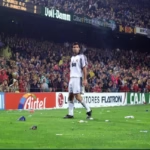
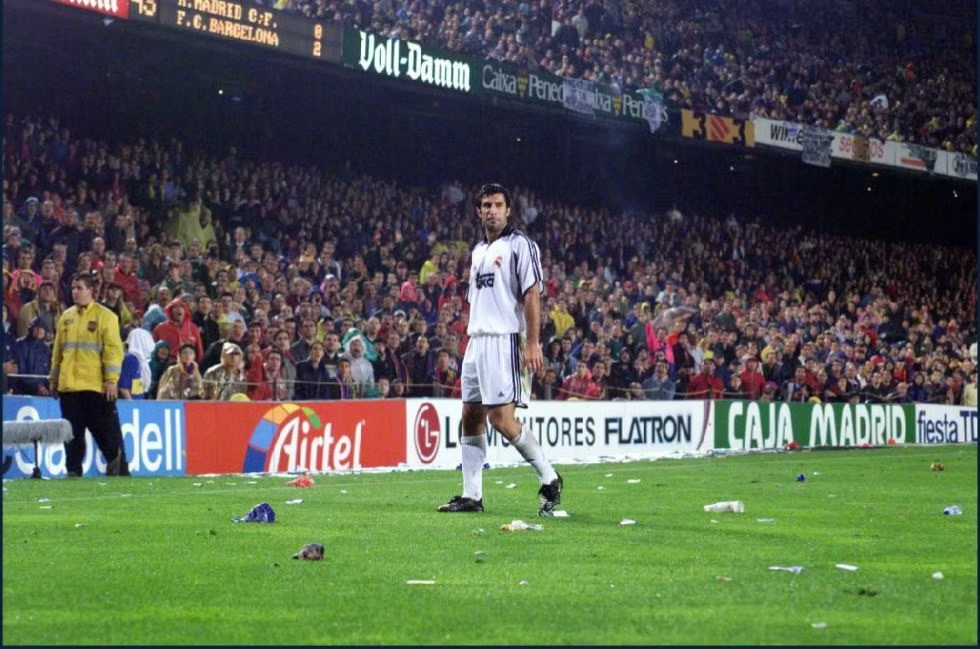
Cigarette lighters, golf balls, whisky bottles — Camp Nou erupted into chaos. But nothing symbolized the fury like that flying object: a severed pig’s head. For a brief moment, the stadium transformed into a scene from a Mario Puzo novel, with Figo playing the role of Jack Woltz waking to an ominous horse’s head.
The Election That Changed Everything
In the summer of 2000, Real Madrid’s presidential election appeared to be a foregone conclusion. Lorenzo Sanz, the incumbent, had the ultimate campaign trail credentials: two Champions League trophies in three years. His campaign relied on one simple truth: why change a winning formula? Yet Florentino Pérez thought differently. He promised the unthinkable: that Luis Figo, Barcelona’s talisman, would swap the blaugrana for the white of Real Madrid.
At first, it sounded absurd. Figo himself dismissed the rumors. But Pérez doubled down. He claimed to have a pre-contract agreement and went as far as promising that season ticket holders would be reimbursed if the transfer didn’t materialize. Against all odds, Pérez’s gamble paid off, and the madridistas embraced the fantasy.
Gaspart’s Broken Promise
While Madrid celebrated their coup, Barcelona elected Joan Gaspart as president. His campaign, ironically, revolved around a single promise: Figo would stay. That promise collapsed in spectacular fashion. Few presidents in football history have squandered goodwill as swiftly as Gaspart. Reduced to empty threats, he fumed in the press, vowing, “Whoever is responsible will pay for this!” In the end, it was Gaspart who paid, cementing his legacy as perhaps the most ridiculed president in Barcelona’s history.
Adding insult to injury, Figo still posed in Barcelona’s colors during preseason photo shoots, mere days before the transfer was finalized. When he stood alongside Alfredo Di Stéfano at his unveiling as a Real Madrid player, the symbolism wasn’t lost. Decades earlier, Barcelona had lost a bitter battle to sign Di Stéfano. Now history repeated itself. Figo’s move didn’t just begin the Galácticos era; it set its tone. Zidane might have cost more, Beckham may have brought the glamour, but Figo was the catalyst.
The Pig’s Head Incident
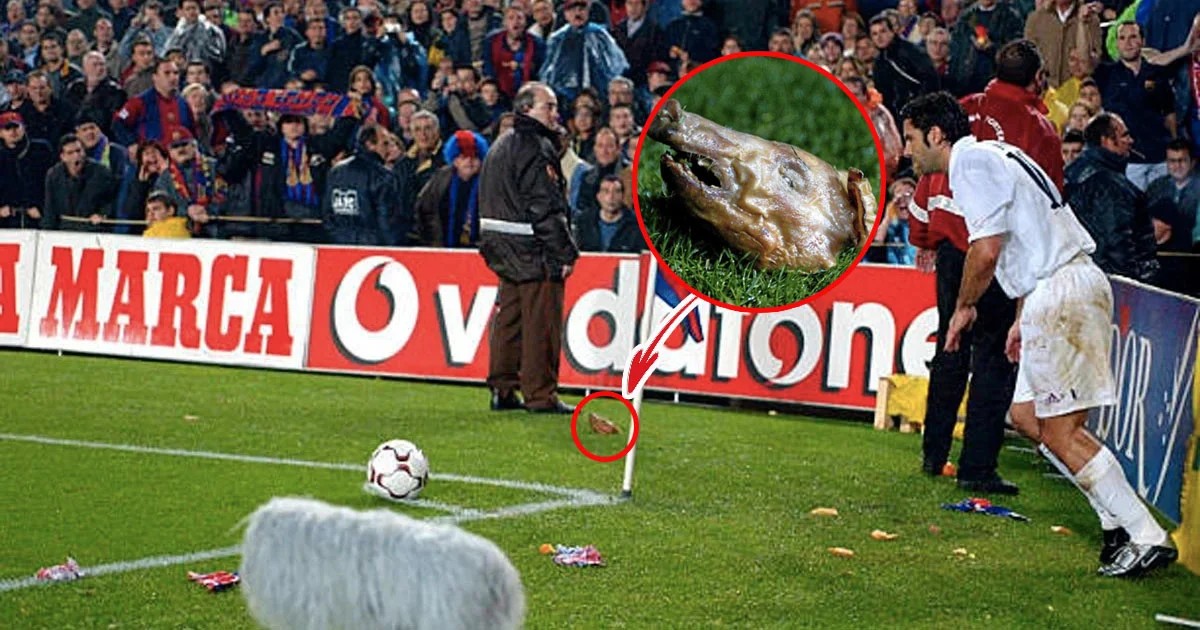
October 24, 2002. Real Madrid arrived at Camp Nou as European champions, fresh from their Champions League triumph over Bayer Leverkusen. Barcelona, meanwhile, were licking their wounds after a disappointing fourth-place finish in La Liga. The buildup to the match centered on one strange question: would Figo take corners?
Previously, Real Madrid had shielded him from the hostility of Camp Nou’s ultras, avoiding corner kicks in high-risk areas. But this time, fate intervened. In the second half, Figo was tasked with taking two corners in quick succession. Camp Nou erupted. Objects rained down from the stands, and among the barrage was the infamous pig’s head. The match had to be halted for 13 minutes as referees and players attempted to regain control.
Spanish media had a field day. Marca dubbed it the “Derby of Shame,” while El Periódico de Catalunya compared every corner Figo took to “Vietnam.” Louis van Gaal, Barcelona’s coach, accused Figo of provoking the crowd. Figo’s retort was cutting:
It’s strange he has an opinion about me. In two years as my coach, he barely said a word to me. And I saved his ass more than once.
The Unforgivable Betrayal
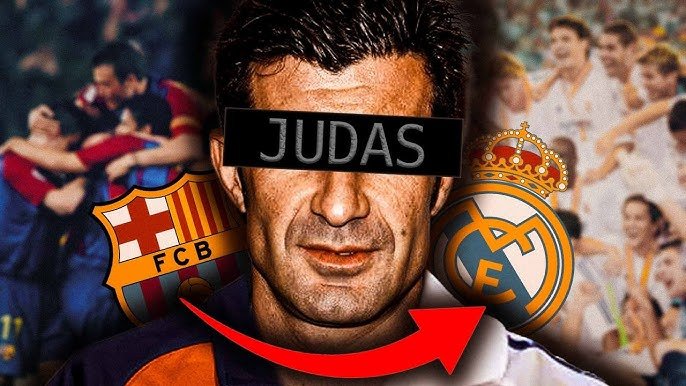
The years Figo spent as Barcelona’s savior were erased from Catalan memory. Even in 2010, when he returned to Camp Nou as an Inter Milan official, the animosity remained palpable. And as for the pig’s head? It didn’t end up in the trash. Instead, it became a relic, displayed in the annals of football’s history, a symbol of one of the game’s most dramatic betrayals.