What Was the Chile vs Soviet Union Walkover?
Short historical context:
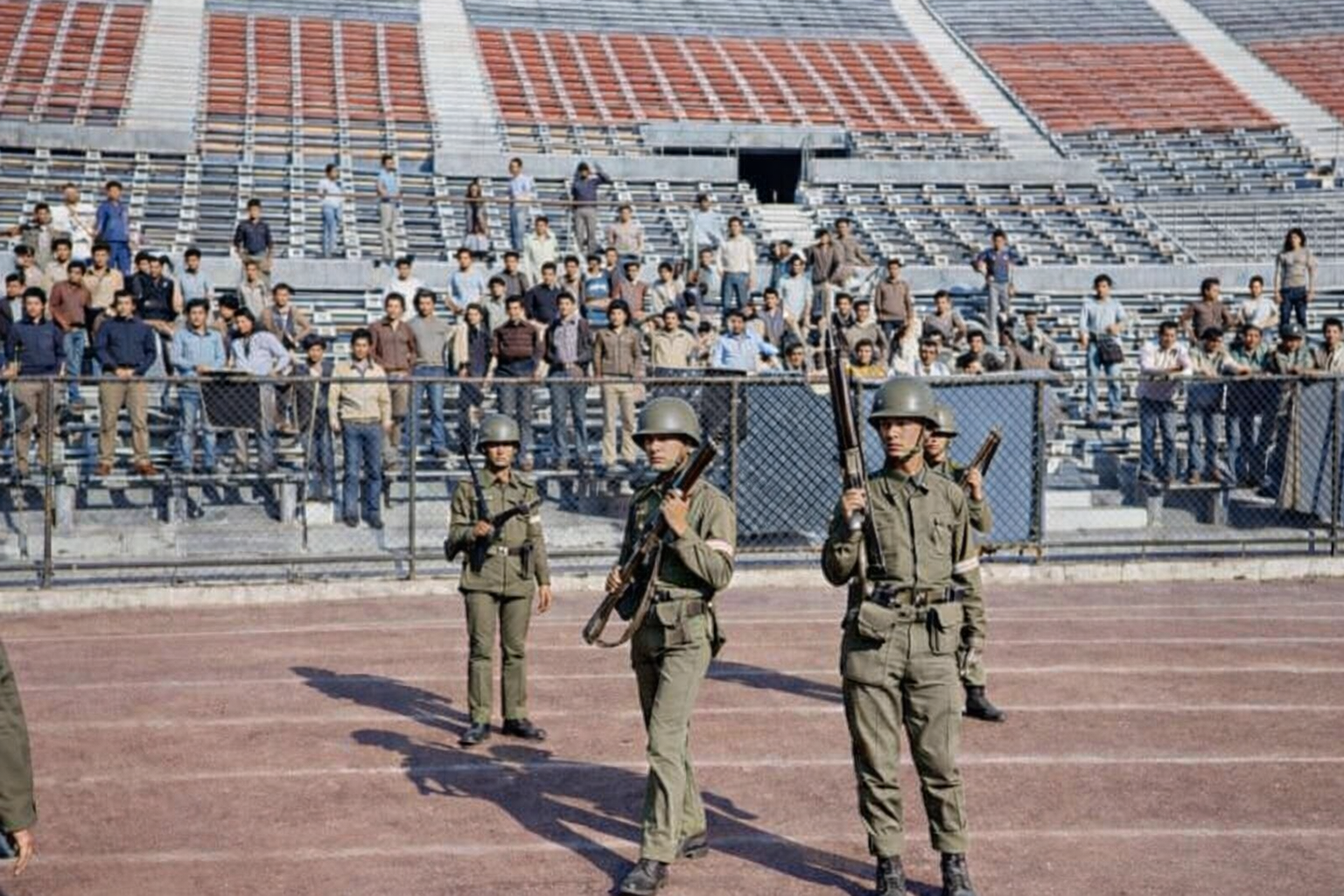
The Chile vs Soviet Union walkover took place during the 1973 play-off for the 1974 World Cup. After a tense first leg in Moscow ended 0-0, the decisive match was scheduled at Santiago’s Estadio Nacional — a venue that had recently been used as a detention centre following the military coup in Chile.
The Soviet Union refused to travel, arguing that they could not play in a stadium linked to political repression and demanded a neutral venue, which FIFA rejected. As a result, Chile entered the pitch alone, kicked off, and scored into an empty net before the match was officially abandoned, securing qualification without facing an opponent.
Who Was Chile’s Coach During the Soviet Union Walkover?
Chile’s national team during the controversial walkover against the Soviet Union was led by Luis “El Zorro” Álamos, an experienced manager who had already guided La Roja at the 1966 World Cup and would later take the team to the 1974 tournament in West Germany.
Known for his disciplined approach and tactical balance, Álamos faced one of the most politically charged moments in football history. His role during this period went far beyond tactics — managing a team caught between international politics, military pressure, and global media attention.
A Goal Without an Opponent
October 21, 1973. Estadio Nacional, Santiago.
The second leg of a World Cup qualification playoff between Chile and the Soviet Union. Eighteen thousand spectators in the stands. The Chilean crowd listens intently to the national anthem. The whistle finally blows.
Seconds later, a goal is scored. It could hardly be otherwise. The Soviets are not on the pitch at all. Chilean players exchange high-fives. The crowd erupts. One of the most absurd matches in football history becomes reality. A confrontation that the Uruguayan writer Eduardo Galeano would later call “the most disgraceful match in history.”
Why the Soviets Never Came
Why did the Soviets refuse to travel to South America for a match of such importance? One fact is enough. In the weeks leading up to the game, Estadio Nacional had been used as a concentration camp. The locker rooms served as interrogation chambers. Torture rooms. The stadium itself had become a prison.
But let’s rewind. Because this story begins earlier. With the sound of an AK-47 belonging to Fidel Castro.
A Gunshot and a Coup
It was with that very weapon, gifted by the Cuban dictator, that Salvador Allende took his own life, sealing the military takeover of Chile by General Augusto Pinochet. Allende’s socialist government was overthrown in a coup—openly supported by the CIA—just weeks before the playoff was scheduled.
This was the early 1970s. The Cold War was not simmering; it was boiling. The Soviet Union was losing influence to the Americans in a country it once considered friendly. Within hours, both sides became enemies. Mortal ones.
You might ask, who exactly picked these two teams to play each other? Two nations on different continents, suddenly locked in a World Cup playoff, now also locked in ideological warfare. The odds of this happening were microscopic. And yet here they were. It was immediately clear that playing these matches “normally” would be impossible.
The Stadium Becomes a Camp
Pinochet was not known for mercy. Once in power, he moved swiftly and brutally against political opponents. Soon, there were not enough prisons. His attention turned to Estadio Nacional—large, centrally located, convenient.
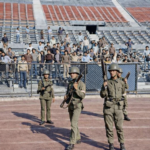
It became a detention camp for enemies of the regime. Many disappeared there. Torture methods were as crude as they were effective: musicians had their fingers broken and were then ordered to play their instruments. Tens of thousands were held inside the stadium at once.
As the first leg in Moscow approached, Soviet sympathizers were being murdered on the very pitch where the return match was supposed to take place.
Getting Out of the Country
The first match in Moscow took place almost by accident. The military junta had banned anyone from leaving Chile. Eventually, thanks to the intervention of a coach with powerful military friends, the players were granted permission.
Pinochet agreed because he saw opportunity. This was not about sport. This was about humiliating an enemy on a global stage. The players were allowed to travel. Their families were kept behind as hostages.
Moscow, 0–0, and a Friendly Referee
In Moscow, in a stadium boiling with hostility, the match ended 0–0. The Soviets were desperate to crush Chile. Failure to qualify would have been a systemic embarrassment, a stain on national honor.
Chile survived. Barely.
They defended desperately. The Soviets dominated and should have won. But Pinochet had help. The referee.
Hugo Gasc, the only Chilean journalist present, later admitted: “Fortunately for us, the referee was a staunch anti-communist. Together with Francisco Fluza, the head of our delegation, we convinced him not to let us lose. And that’s exactly what happened.”
It’s hard to believe that ideological conviction alone explains decisions made in a match of that magnitude, in that place.
Pinochet’s Choice of Venue
The return leg was decisive. Pinochet, with characteristic cruelty, refused to move the match. He insisted on Estadio Nacional.
He wanted the Soviets to play on the same pitch where communists had been executed days earlier. To change in locker rooms where their comrades had been tortured.
The Soviets protested to FIFA. They compared playing there to staging a match at Dachau. Enter the third player: Stanley Rous, the English president of FIFA.
FIFA Looks Away
England had failed to qualify for the 1974 World Cup. Rous saw opportunity. If communist nations boycotted the tournament in protest, there might be room—conveniently—for England.
FIFA sent inspectors. Pinochet cleaned up. Officially. Unofficially, prisoners were reportedly still hidden inside the complex during the inspection. Moving everyone out was simply too difficult.
Rous had reasons to look the other way. Estadio Nacional was approved. Curiously, earlier that same year, FIFA had no problem moving a Northern Ireland–Bulgaria match to neutral ground when Belfast became politically unstable.
A Walkover and a Farce
The Soviet Union refused to travel. Defender Yevgeny Lovchev later said: “Our officials feared the propaganda disaster of losing. Had we won at home, I believe we would have been allowed to play the return leg.”
Given Pinochet’s influence, friendly referees, and the quiet backing of FIFA, it’s hard to imagine Chile being allowed to lose at home. A defeat in that stadium would have been far worse than withdrawing on so-called humanitarian grounds.
Chile were awarded a walkover. That wasn’t enough for Pinochet.
Football Without Football
Tickets were sold. The anthem was played. Referees were present. Everything looked like a normal match—except the opponent.
Chile scored once. The “match” was ended. To keep the festivities going, a friendly against Santos was arranged. At least the Brazilians restored some dignity. They won 5–0.
When Politics Touches Football
This was a match where deceit, manipulation, and moral rot exceeded any reasonable scale. A blood-soaked general. A FIFA president willing to ignore crimes for personal gain. Corrupt referees. And hundreds of nameless participants whose roles will never be fully known.
Is it an exaggeration to say that politics is a sewer—one that, when it touches football, can stain it beyond recognition?
In this case, it didn’t just stain it.
It swallowed it whole.