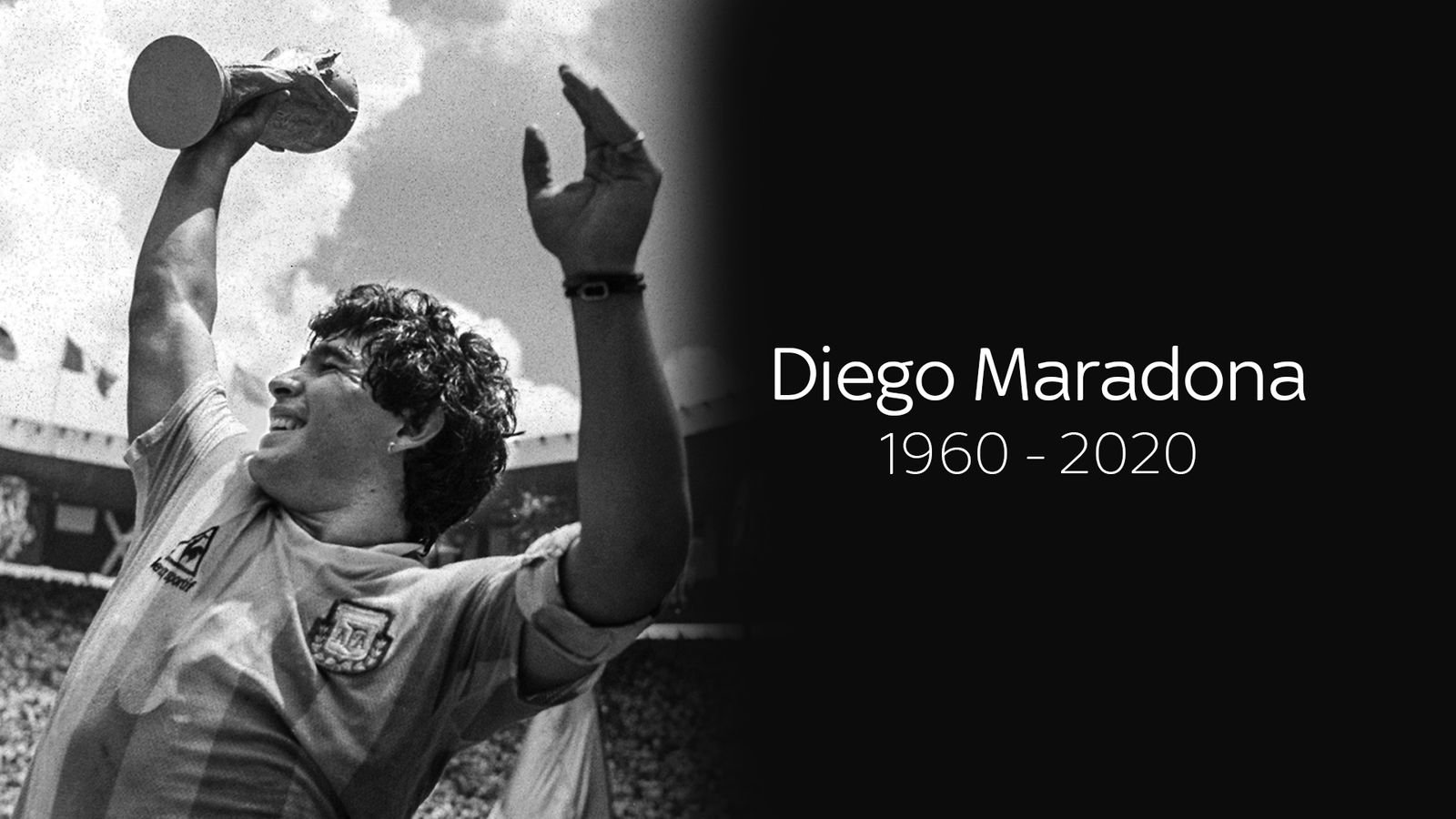
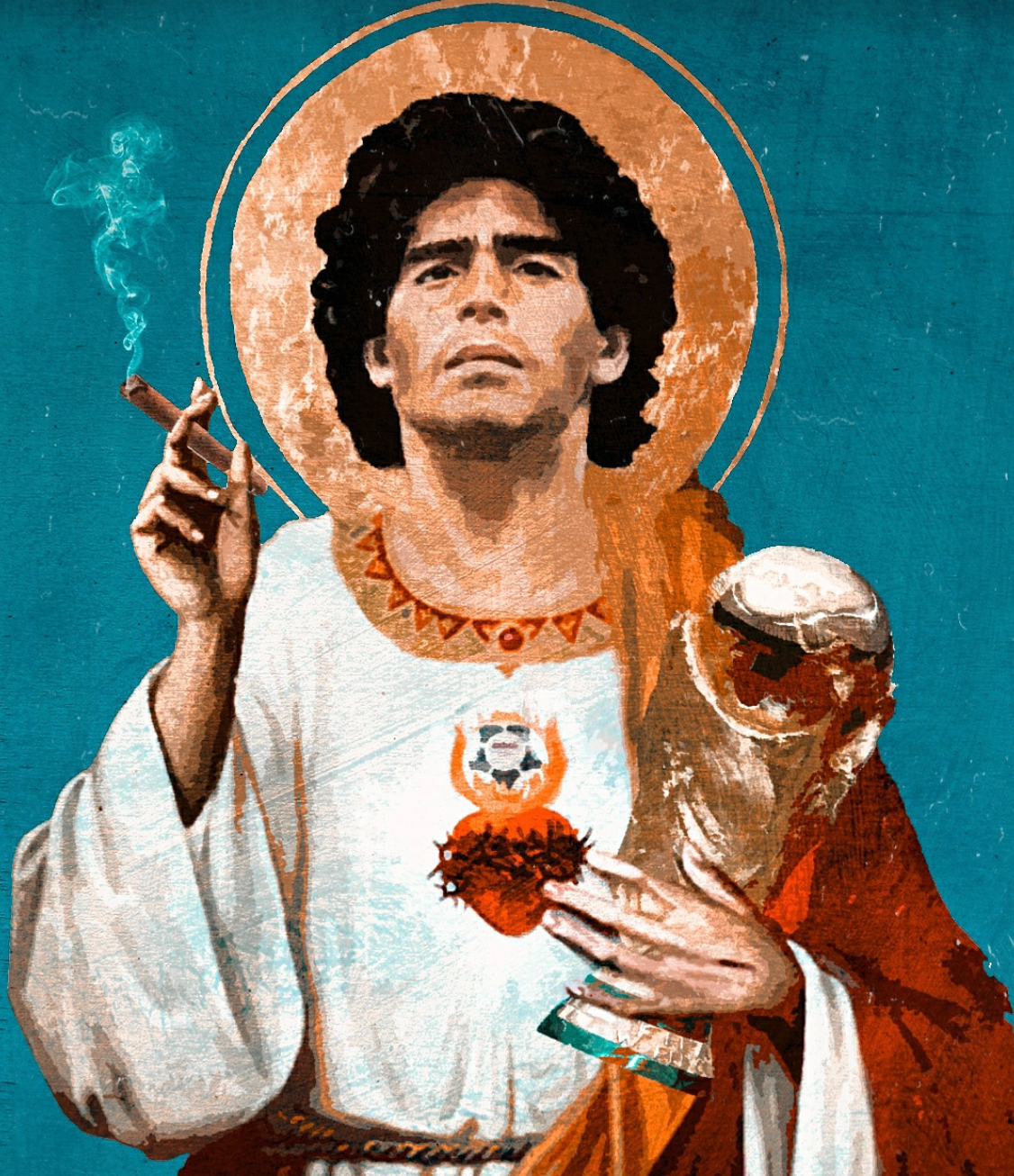
Perhaps football’s greatest ever, a coach who never quite fulfilled his promise, and a lightning rod for controversy. He remains an immortal figure in Argentine football, a mosaic of brilliance and chaos.
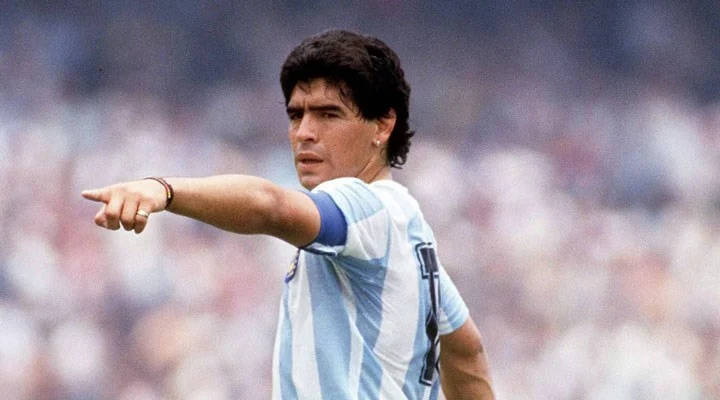
It was October 30, 1960, when Diego Maradona and Dalma Salvadora Franco welcomed their fifth child at Policlinico Evita in Lanús. In Villa Fiorito, she was known as Tota. The child was named after his father: Diego. He would grow up to be called El Pibe de Oro—the Golden Boy.
Beginnings in Villa Fiorito
Diego’s story began in Villa Fiorito, one of Buenos Aires’ most impoverished districts. “If there was food, we ate; if there wasn’t, we didn’t,” he would later reflect. Yet he described his childhood as happy, with a football—sometimes an orange or a ball of crumpled paper—as his constant companion. His first real football, a gift from his cousin Beto Zárate, became his obsession. For three years, he slept with it in his arms, knowing even then that he was destined to be a professional footballer.
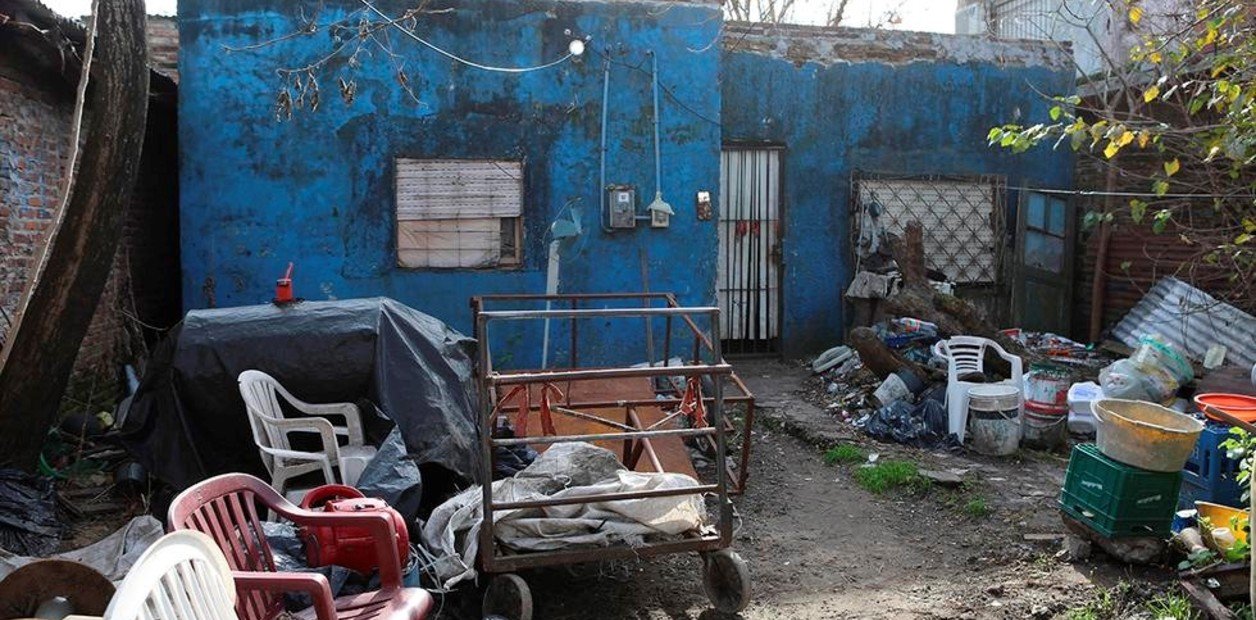
His father, whom Diego later called “the best person I ever knew,” toiled relentlessly in a factory to provide for the family. “My parents would have given me the moon if they could,” he said.
Diego’s first club was the modest Estrella Roja in Fiorito. Wearing their kit felt like a dream. But he dreamed bigger—of Boca Juniors. In his imagination, Estrella Roja’s red and white turned into Boca’s iconic blue and yellow. That dream became reality when Francisco Cornejo spotted him and brought him to Argentinos Juniors’ Cebollitas youth team. At 12, Diego led them to a ninth-division championship, and within two years, he had rocketed through eight tiers of football, arriving at Primera División. Boca soon beckoned.
Boca, Barcelona, and Beyond: the Journey of Diego Maradona
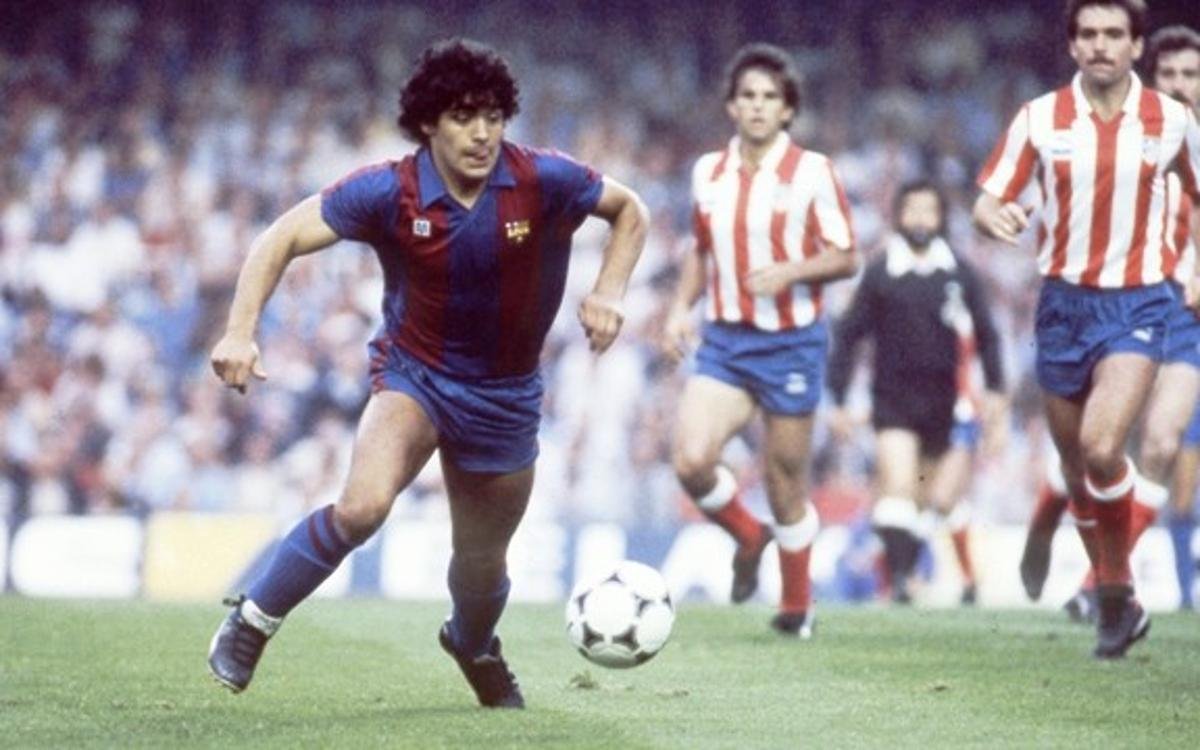
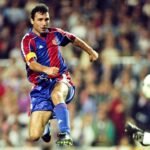
In 1981, Diego joined Boca Juniors, rejecting River Plate without hesitation. His talent blossomed, securing his first top-flight title before Europe came calling. By 1982, at just 21, Diego was unveiled as Barcelona’s record signing, costing the Catalan club 1.2 billion pesetas (€7.2 million).
At first, he was a prodigy on the cusp of greatness. He was the star of the 1979 U-20 World Cup and a promise waiting to explode on the European stage. But his Barcelona chapter would last just two seasons, marked more by pain than glory.
Hepatitis and Heartache
Maradona’s struggles began in December 1982. Complaining of ankle pain, he was sent for tests. Instead, the doctor noticed his jaundiced eyes. The diagnosis: hepatitis. Diego was stunned.
“Injuries come and go, but hepatitis?!”
Confined to his home, he missed three months of football. The season resumed under César Luis Menotti, a coach Diego admired, replacing the no-nonsense Udo Lattek. When Diego returned in March 1983, the spark was back—briefly.
The Goikoetxea Tackle
September 24, 1983: Barcelona faced Athletic Bilbao. That morning, Diego visited a young boy in the hospital, injured in a car accident. As Diego left, the boy warned, “Be careful; now it’s your turn.”
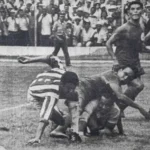
That evening, Athletic’s Andoni Goikoetxea shattered Diego’s ankle in a brutal tackle. As he writhed on the pitch, he sobbed to teammate Migueli, “He’s broken everything.”
Diego was sidelined for 106 days. Goikoetxea earned a 7-match ban after an 18-match suspension was reduced. The Spanish press lamented, “A ban on artistry.” Yet Maradona returned stronger, scoring twice against Sevilla in his comeback match in January 1984.
Years later, Diego forgave Goikoetxea but not Bilbao coach Javier Clemente, who had praised his team’s “pride” after the incident.
Feuds and Farewells
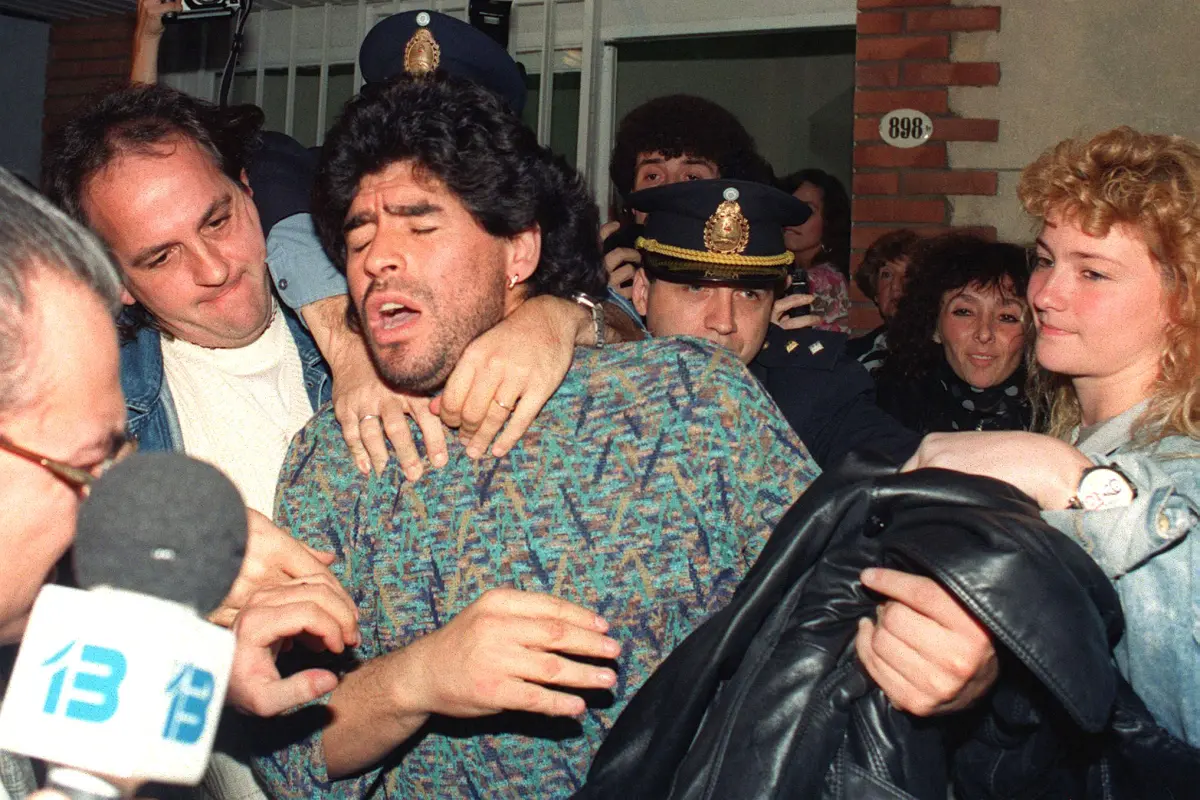
Barcelona’s president Josep Lluís Núñez became Diego’s nemesis. The relationship deteriorated, with Maradona accusing Núñez of orchestrating media campaigns against him. Criticized for his nightlife and hepatitis diagnosis, Diego finally demanded a transfer.
Núñez refused, leading to Maradona’s iconic ultimatum: “Sell me or I won’t play.” The club relented, and Diego joined Napoli, where he would achieve his ultimate glory.
Maradona’s time in Barcelona was a whirlwind—flashes of brilliance shadowed by injury and discord. Yet, even amid the chaos, his genius shone, hinting at the legend he would become.
And so, he left for Napoli—or so he claimed. The story from the other side, naturally, diverges. During a Copa del Rey match against Athletic Bilbao, Maradona delivered a brutal foul on Sola. Once again, it was Athletic Bilbao; once again, it was a brutal foul, though this time from the opposite direction. The entire match descended into something resembling an outright brawl. Diego was suspended. According to Barcelona president Josep Lluís Núñez, this was the reason he decided to sell him. Later, Núñez would cite another factor: he claimed he had known that Maradona was using cocaine. Two narratives, wholly contradictory, but the outcome was the same—a transfer to Napoli for a fee of 1,875 million pesetas (€7.1 million). Naturally, both Núñez and Maradona insist that it was their decision. No surprises there.
“God is God, I just play football.”
Much has been said about him—an overwhelming amount, and almost all of it contradictory. To some, he was a hero; to others, a fraud. They spoke of the Hand of God, of the Goal of the Century, and of monumental injustice. Jorge Valdano, who witnessed it all from the pitch, suggested that Maradona’s performance in that match encapsulated the dual essence of Argentina and its people: cunning and crafty on the one hand, capable of ensnaring opponents in traps, yet on the other hand, brimming with talent, genius, and unmatched artistry. In truth, the description feels less like that of a god than of some ancient chthonic deity out of a Norse myth—one that creates as easily as it destroys. Diego, of course, wouldn’t accept such comparisons. “It wasn’t the Hand of God,” he declared with conviction. “It was the hand of Diego.” A statement brimming with hubris—only matched by the disdain of Pelé, whose status as O Rei was beginning to wane under the shadow of this new footballing god. “The only header Maradona ever scored was with his hand,” Pelé quipped sardonically.
Brazil’s press stood firmly by their king. “Pelé will always be the King,” read the headlines, alongside dismissals of Maradona as “controversial at best.”
The English, for whom Diego’s two goals spelled direct elimination from the World Cup, responded with a surprising calm. “This loss is no disgrace. No team in the world can stop a genius like Maradona,” wrote the Daily Express the following day. Even those meant to remain impartial couldn’t resist comment. The referee, Tunisian Ali Bin Nasser, later told Olé how he felt officiating that Argentina-England match: “I’m glad I witnessed the best goal of the century. His dribbling was unbelievable. I couldn’t congratulate him on the field because I had to remain neutral, but inside, that goal brought me immense joy—it was spectacular. After the match, I went up to him and offered my deepest congratulations.” Maradona himself would reflect on both goals repeatedly, often inconsistently. Sometimes, he’d admit a peculiar fondness for the first, the one scored with his hand. Other times, he’d say, “The second goal was like a dream. Back in Fiorito, I dreamed of scoring a goal like that for Estrella Roja. I achieved it at the World Cup.”
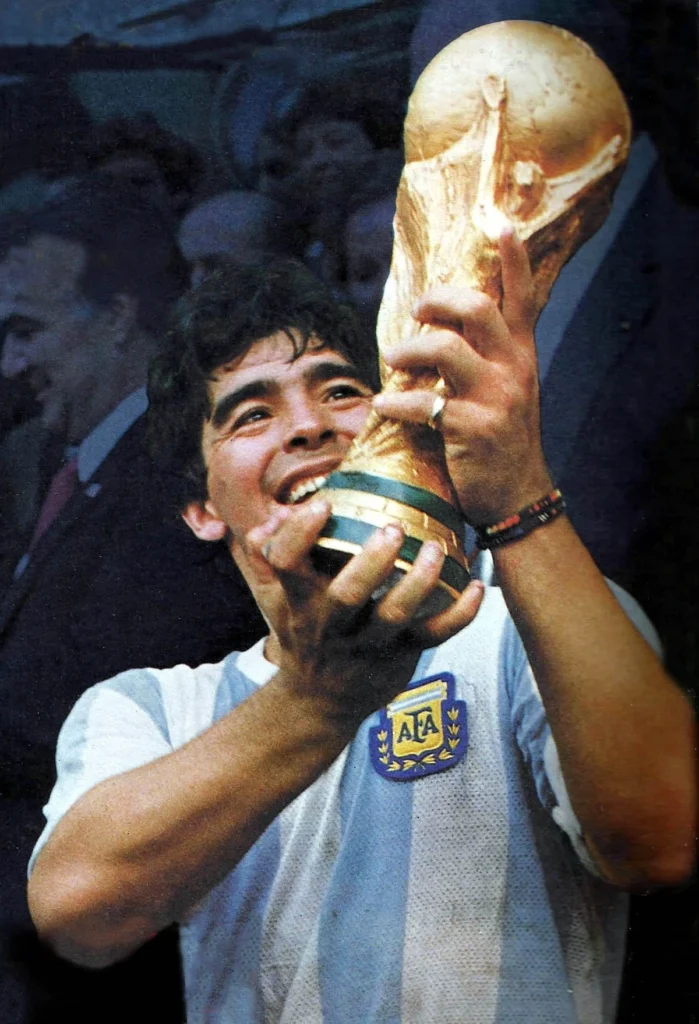
But all that came later. At this moment, it’s June 22, 1986, the World Cup quarterfinal at Mexico City’s Estadio Azteca. Argentina, storming through the group stage and having dispatched Uruguay in the Round of 16, now faces England. Every match from here is a final. On this day, the Azteca’s stands are packed with 100,000 fans, sometimes spilling over into scuffles that momentarily halt play, particularly during the second half. The game itself unfolds under the shadow of war—the Falklands conflict lingers uncomfortably in the background, a context that only intensifies as history unfolds.
The first explosion occurs in the 51st minute. Valdano sends a ball into the box, Maradona leaps alongside Shilton, and—crucially—the ball strikes his hand rather than his head before finding the net. Bin Nasser allows the goal, ruling it a header. Just four minutes later, Maradona delivers another blow—this one less controversial but infinitely more iconic. He dribbles past half the pitch, his feet glued to the ball, weaving through defenders as if they were training cones. A goal for the ages, often dubbed the Goal of the Century. Years later, Lionel Messi would uncannily replicate it for Barcelona against Getafe. Maradona’s brace floors the English. Even Lineker’s header, which narrows the scoreline, can’t undo the damage. Argentina marches on, eventually defeating Germany 3-2 in the final to claim the World Cup.
The first goal—the one scored by the Hand of God—would spark debate for decades. In 2005, on his TV show La Noche del Diez, Maradona admitted it had been a handball. Three years later, The Sun quoted him saying that if he could turn back time, he’d have ensured the goal never happened. “But a goal is a goal,” he added. “Thanks to it, Argentina won the World Cup, and I became the best player in the world. History can’t be undone. I just want to look forward.” Soon after, however, Diego denied those words, claiming he had never apologized and never would.
Sinner Like Naples
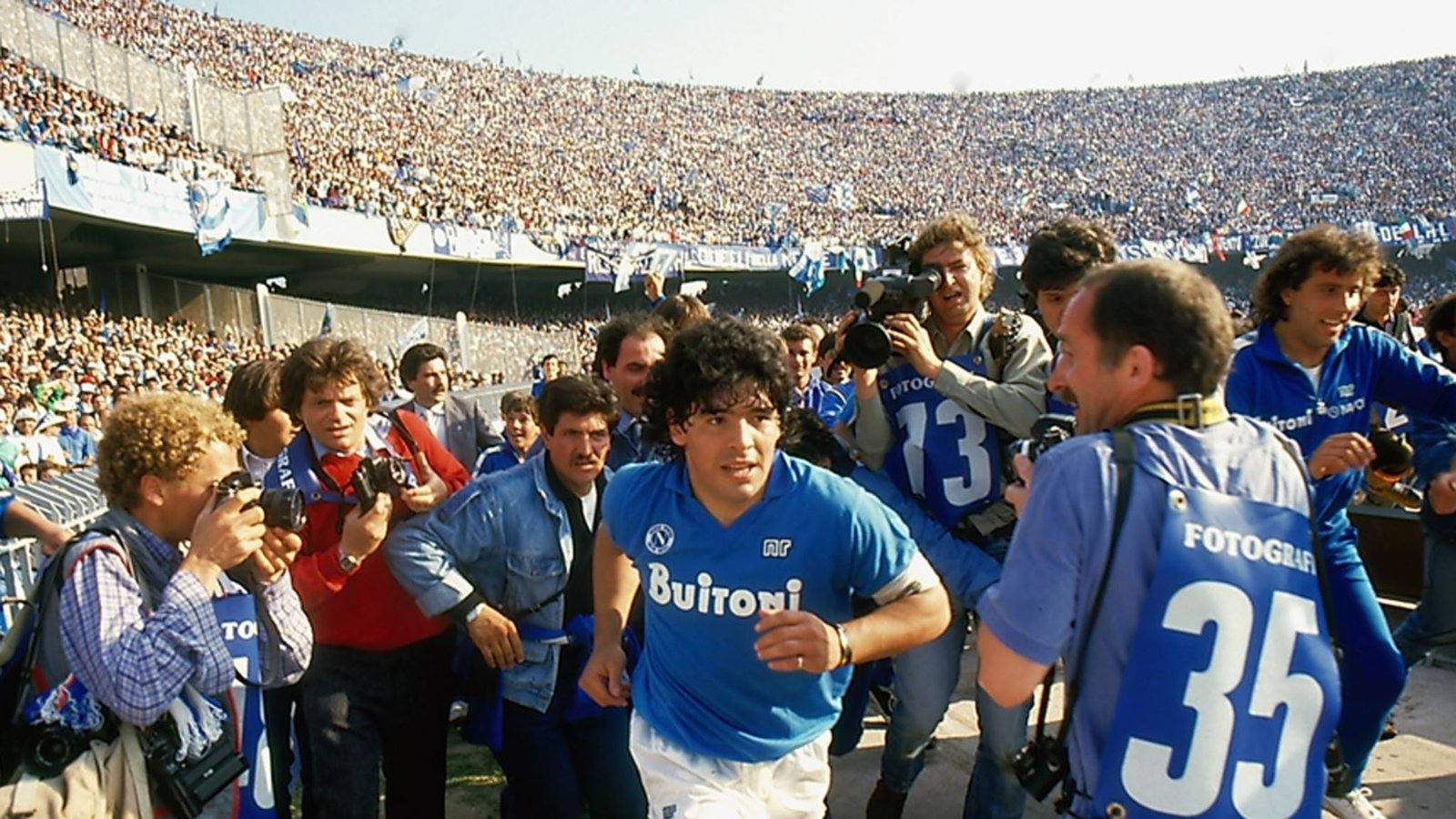
Naples—where Diego found his rebirth after Barcelona, and where he ultimately met his downfall.
In Napoli, he achieved the highest club honors of his career: two Serie A titles, a UEFA Cup, and another two runners-up finishes in Serie A. “When I came to Napoli, I started everything from scratch,” Diego would later reflect. It was there that he wrote the story that cemented him as one of the greatest players in football history. But it was also there that he destroyed both his story and his career.
Naples—a city of sin. From the beginning, it lured Diego with promises so tantalizing that they couldn’t be refused. Or perhaps he just didn’t want to refuse them. Cocaine entered the picture, along with Diego’s mysterious connections to the Italian Camorra. Soon, the police launched an investigation into an alleged drug trafficking operation involving Maradona and Guillermo Coppola. Their chauffeur, Piero Pugliese, implicated them both in his testimony. However, Diego never admitted to selling drugs. He would later confess to using cocaine—a revelation that wasn’t exactly groundbreaking in light of the damning evidence—but he firmly denied the allegations of trafficking.
Ultimately, it was cocaine that ended his relationship with Napoli. On March 17, 1991, after a win over Bari, he underwent a drug test. Of course, cocaine was found in his system. The result cost him 15 months of suspension and mandatory therapy. He lasted just three months in treatment. By the time the ban ended and he was cleared to play for Napoli again, the whole saga was effectively over. He didn’t want to return to the club that had once been his life; everything had become too complicated. The connections he had made in Naples, his ties to the Camorra—it all overwhelmed him. He fled to Seville, under the care of Carlos Bilardo, the former coach of Argentina, who once again took him into his fold. Maradona would later insist that he didn’t escape, that his move to Seville was simply because he could no longer play in Naples. But at the same time, he believed he didn’t deserve the way things had ended, the way he had to leave. One thing is certain—his escape to Seville didn’t free him from his past or from cocaine.
Three years later, in the 1994 World Cup in the U.S., he tested positive again. That same story would repeat itself later at Boca Juniors. Diego needed years to come to a simple truth, one he would never again question: “Cocaine kills you.”
The Death of Diego Maradona
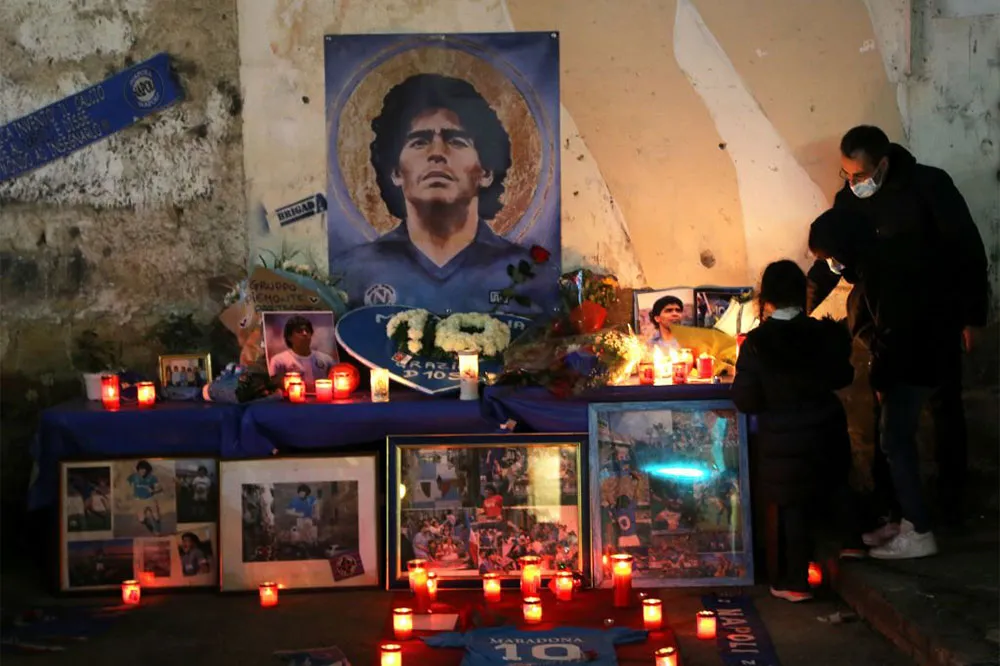
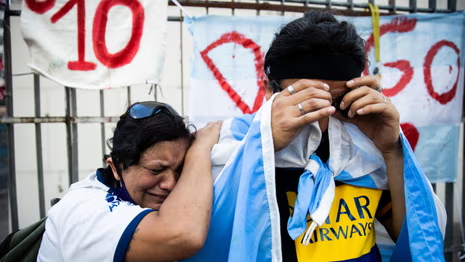
For years, he treated death like an opponent on the pitch: he would rush toward it, only to sidestep at the last moment. But on Wednesday, November 25th 2020, it was no longer possible: Diego Armando Maradona passed away at the age of 60 after suffering a cardiac arrest. Argentina declared three days of mourning.
“And then came the day. The day the inevitable happened. It was a blow to the emotions of an entire nation. It will reverberate across every latitude. This is a sentence that has been written before, but it always turned out to be premature. And now, it is part of a sad reality: Diego Armando Maradona is dead.”
“Diego can’t sleep, can you help him?”
On October 31st, Maradona managed to turn 60, despite the fact that twenty years earlier, the TV station “Cronica” had interrupted its program and displayed his obituary for three minutes, and several years later, his condition had been so bad that he had received the last rites. Two years ago, rumors spread that he had died. He himself denied it, shouting at reporters, “I’m alive, you bastards!” Just three days after his birthday this year, his life was once again in danger. His friends weren’t surprised, as they had long suspected depression: he couldn’t eat, he couldn’t stop drinking. He mixed tranquilizers with alcohol. Fans, too, weren’t shocked because when Maradona appeared on the pitch at Gimnasia y Esgrima La Plata — the team he had been coaching for over a year — he looked pale, sluggish, and slower than usual. He was escorted by assistants.
“He walked like he had broken knees and clay feet,” one newspaper reported.
The next day, he was admitted to a hospital in La Plata, 60 kilometers from Buenos Aires. Anemia, COVID-19, dehydration, exhaustion, another heart attack, a stroke — journalists threw out guesses. Fans were already on their way to the hospital. The first appeared at the doors right after the ambulance, and within hours, the crowd had grown to hundreds. Millions of Argentinians were concerned. It was one of the most dangerous brain injuries, typically caused by a heavy blow or years of heavy drinking. Maradona denied hitting his head recently.
“The surgery lasted over an hour and went without complications,” said Leopoldo Luque, Diego’s doctor. He finished his sentence, turned toward the automatic doors of the Olivos clinic, and couldn’t believe it. The crowd was chanting his name, and the applause was so loud it gave him chills. He had dreamed of this moment as a child. He remembered watching games with his parents, who would calm him when he lost his temper: “Don’t worry, we’ll win because we have Maradona.” He had grown up in his cult and wanted to play like him, to be the crowd’s hero. But he quickly realized he didn’t have enough talent. He abandoned his dreams of fame and became a neurosurgeon. Four years ago, he received a call that changed everything. “Diego can’t sleep, can you help him?” he was asked. He made sure it was the Diego he thought it was. That night, he didn’t sleep a wink. He had been Maradona’s doctor for four years.
A moment later, Luque turned toward the people, smiled softly, and waved. They screamed even louder. Some held rosaries, others held signs — “Silence. God is sleeping.” Earlier, he had told reporters about the surgery and hadn’t expected them to interrupt with the question of whether he had removed the brain clot with “the hand of God.” Chaos surrounded him: he had never seen so many cameras or people outside a hospital. They sang, danced, drank, cried, knelt. Diego’s fame had transferred to him — with all its consequences. People loved him, started treating him like a national hero, he gained followers on Instagram, but gossip websites also showed his wife and children. Journalists even shoved recorders under his helmet when he left the hospital on his motorcycle. One newspaper even dug up a story from years ago when he had been accused of killing a man during a New Year’s brawl. He was acquitted in court, but now he had to confess publicly. Finally, the clinic doors opened, and Luque disappeared.
Diego Maradona — the Embodiment of Argentina
The worst was still ahead of him: Diego was about to wake up. Overly sweaty, trembling, furious. He didn’t want to stay in the clinic any longer. He demanded to be sent home, but the doctors agreed that since they had finally managed to convince him to stay in the hospital bed after weeks of persuasion, they should keep him there for as long as possible. Away from alcohol, which, in recent years, had reportedly replaced cocaine in his life. Only here could they keep him under control. “Diego is not used to being told ‘no,'” the doctor confessed. As soon as Maradona woke up, he ordered him to leave the room. He threw a tantrum. Doctor Luque stepped out, knowing that with Diego, you had to approach him kindly. There was no point in confrontation — he would always pull out the bigger and sharper knife. Through kindness, he had helped him lose almost 15 kilograms that summer, allowing him to walk again. “I’m here to help you. You showed the Argentinians that you should show up when things look hopeless,” he flattered his ego. He invited him for walks, and over time, they started playing football together, and they became friends. Maradona joked, “Your name is Leopoldo Luque (the same as the former Argentina striker — editor), but you play terribly.” Diego lost weight while under his care. But in the last weeks, Maradona had been in isolation after coming into contact with a person infected with COVID-19. He was depressed. He had dreamed of a big birthday party, but instead, he had to celebrate his 60th alone. His followers took to the streets of Buenos Aires, singing him “Happy Birthday,” drinking to his health, waving flags and “60” balloons. On Avenida 9 de Julio, an impressive avenue cutting through the heart of Buenos Aires, another huge mural of him was painted. He couldn’t be there, as he was in a high-risk group. It was about COVID-19, but it could be taken more broadly — every step he took was risky. In solitude, he would take another bottle of alcohol, swallow painkillers, take tranquilizers, eat whatever he wanted, and eventually, stop eating altogether. He gained weight again.
“Nothing is easy with Diego. Now, when he sees me, he wants to kill me. He’s the hardest patient I’ve had, but I think he wants to get better. Mentally, he’s in bad shape, he should stop drinking. His whole family agrees he’s uncontrollable. But now we have a chance to grab the bull by the horns. Diego has liver problems, cardiovascular problems, neurological problems. We’ve operated on his brain, but there’s still the stomach, the heart… It’s a mix of many problems. Maradona will stay in the hospital for a while longer, but soon we’ll discharge him, and then he’ll need to go to a place where he will receive constant care and find peace,” the 39-year-old doctor told reporters.