
Footballer, coach, father of Total Football, creator of the Dream Team, journalist, provocateur, grandfather and father, husband, chain smoker, lover of positional play, golf, and lollipops. Three-time winner of the France Football Ballon d’Or. The first man to give Barcelona the European Cup.
This sentence is not an exaggerated list. It is an attempt to encompass you as a single figure who consistently eluded simple definitions. You were a man of contradictions: ascetic in your thinking about football, hedonistic in life; a moralist on the pitch, a rebel against authority; a visionary of the future who despised the past. You were never interested in what had been — only in what could be done better.
Before You Became an Idea
Amsterdam, April 25, 1947
You were born in Betondorp — an estate of concrete, brick, and modest dreams. A place built after the war for workers, where children spent more time on the streets than at home, and where football needed neither goals, nor referees, nor touchlines. A ball was enough. Sometimes even its absence.
You came into the world just a few hundred metres from Ajax’s De Meer stadium. That distance was no coincidence — it was destiny. Your father, Manus, ran a greengrocer’s shop. Your mother, Nel, was the heart of the family. The house was not wealthy, but it was full of people, conversation, and movement. From the very beginning, you were a child of the street. Concrete. Hard. Unforgiving.
It was there that you learned balance. There you understood that a curb could be a one-touch passing partner. That uneven ground was not an obstacle, but a tool. In My Turn, you would later write that concrete taught you to think faster than others — because when you stumbled, it hurt.
Your Father’s Death and Ajax
In 1959, your father died suddenly of a heart attack. You were twelve years old. That moment returned in your autobiography like a shadow that never disappeared. Your father had been your reference point — witty, sharp, a little cunning. After his death, something broke.
And then Ajax appeared.
Not as a football club, but as a protective institution. You began spending entire days at the stadium. You helped with the pitch, cleaned, carried equipment. As an eight-year-old, you walked onto the De Meer field holding pitchforks to aerate the grass before a first-team match. The stadium was full of people. You — a small boy — felt a responsibility you never forgot.
That experience returned later in your philosophy. When you became a coach, you spoke obsessively about the pitch, about order, about clean dressing rooms. Not because you were a pedant. But because you knew that this is where football begins.
The School You Never Finished — and That Shaped You
You were not a good student. You admitted it openly, without shame. School bored you; you saw no sense in dry facts. But you were brilliant at one thing: numbers and space. You could memorise phone numbers after hearing them once. Numerology fascinated you. It was no coincidence that your life would later be full of “fourteens.”
Your school was the street and Ajax. There you learned norms, values, and responsibility. Jany van der Veen — the youth coach — taught you not only technique, but choices. Rinus Michels taught you discipline and systemic thinking. Ajax did not raise footballers. Ajax raised people of football.
Debut and First Rebellion
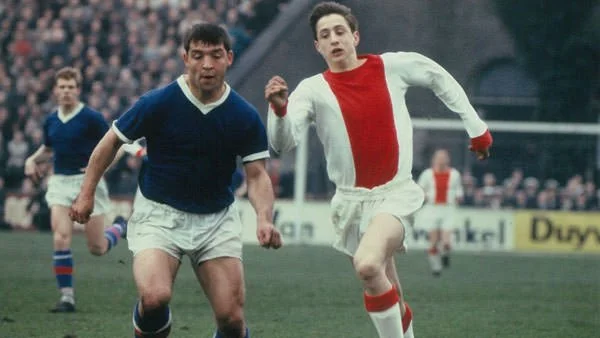
On November 15, 1964, you made your debut for Ajax’s first team. You scored a goal. You were seventeen years old. Thin. Fragile. You looked like a child. But already then you spoke, thought, and behaved like someone who knew more than others.
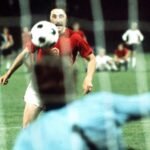
In 1967, in a match between the Netherlands and Czechoslovakia, you were shown a red card. Not for brutality. For protests. For daring to question a referee who allowed opponents to kick you relentlessly. You were suspended for a year. A scandal erupted. The media raged. The federation was outraged.
In My Turn, you wrote plainly: you did not regret it. You knew you were right. For you, football was not a theatre of obedience. It was a game of intelligence. And intelligence — you believed — gave the right to ask questions.
Total Football Was Born in Silence
Ajax of the late 1960s did not become a powerhouse overnight. It was a process. Training sessions, conversations, analyses. You spent hours discussing space, time, and off-the-ball movement with Michels. That was when the foundations of Total Football were laid — though no one was yet using the name.
You did not see yourself as an artist. You saw yourself as an architect of movement. A footballer had to be in the right place, at the right time — not too early, not too late. One touch. One decision. One mistake — and everything collapsed.
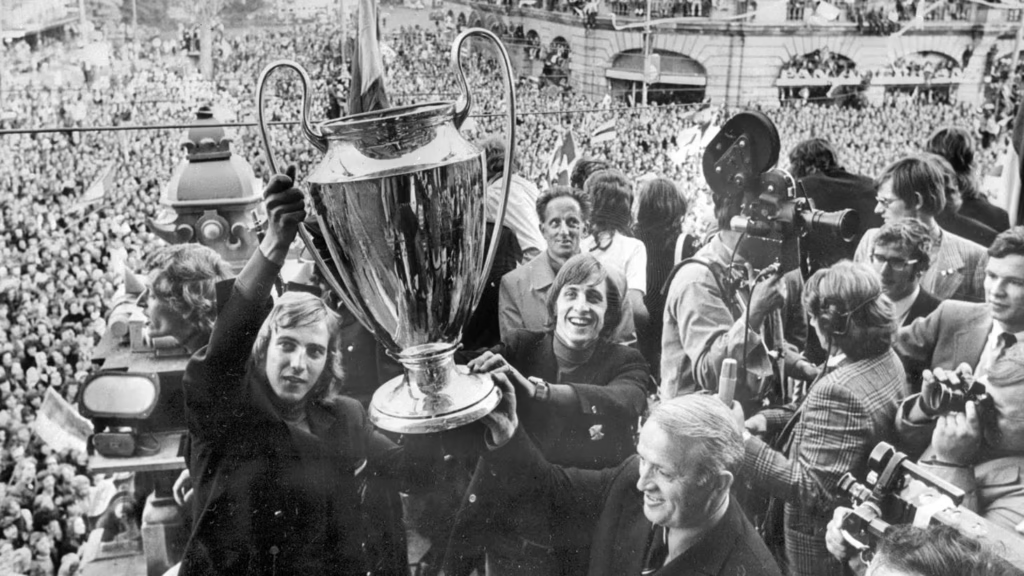
Ajax began to dominate Europe. Three European Cups in a row. But with success came tension. Ego. Jealousy. A lack of discipline after Michels left. Increasingly, you were seen as a problem rather than a solution.
The Vote That Ended an Era
In 1973, the team voted on the captain’s armband. You lost. In your autobiography, you described that moment with pain, but without pathos. You felt that something had ended. That trust was gone. That the project had collapsed.
You called Cor Coster.
“Find me a new club.”
That was how your story at Ajax ended.
Not on the pitch.
In a hotel room.
With a single decision.
Barcelona 1973 — A Political and Cultural Act
Your transfer to Barcelona was not an ordinary sporting move. It was a manifesto. As a Dutchman and a symbol of Total Football, you arrived in Catalonia during the final years of Francoism. Barcelona had waited years for a championship. It had waited for an identity.
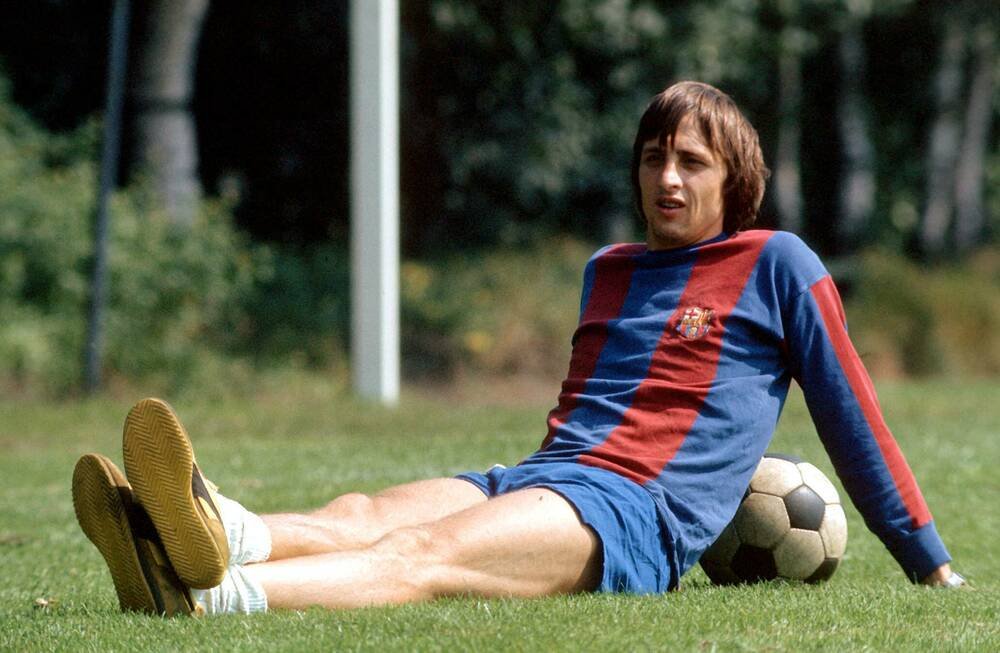
It was night — the eve of Christmas Eve. December 23, 1973. Matchday 15 of the 1973/74 season. League leaders Atlético Madrid arrived at Camp Nou. In Barcelona’s starting eleven were you — freshly signed from Ajax — and Carles Rexach.
Rexach crossed the ball into Miguel Reina’s penalty area. The move looked wasted. And then you appeared in the air. The Flying Dutchman. You leapt high, stretched your right leg even higher, twisted in mid-air, and reached the ball… with your heel. When the net rippled, the world remembered it as the Phantom Goal. Le but impossible de Cruyff.
On February 9, 1974, your son Jordi was born. A name banned by the Franco regime. A political decision. You knew exactly what you were doing.
Smoking, Rebellion, and Private Life
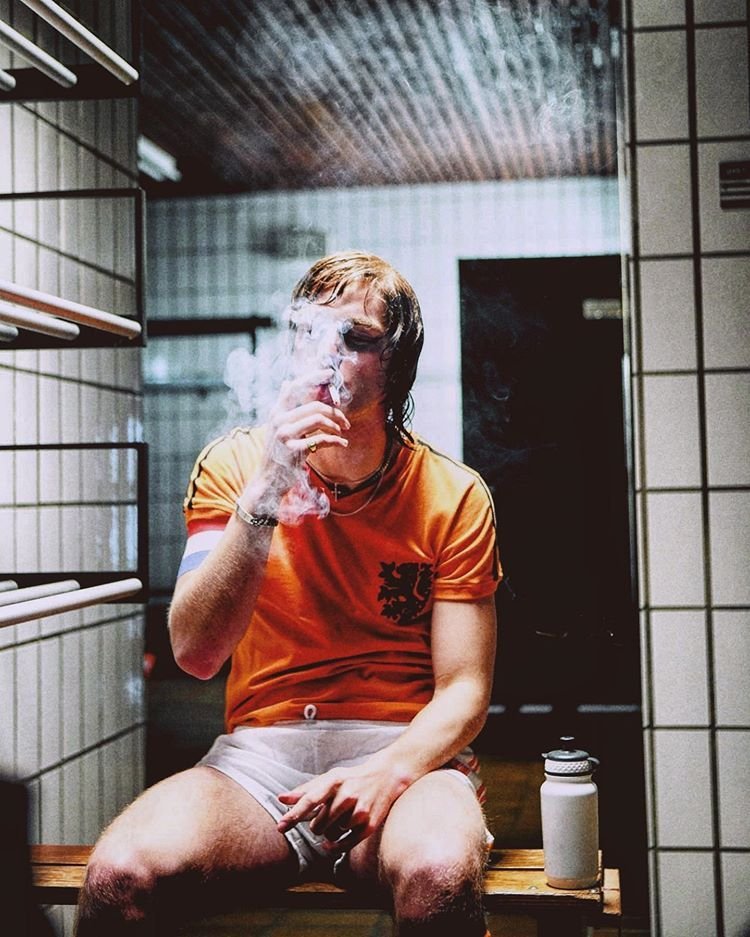
You smoked. A lot. Without shame. The cigarette became your trademark. You were aware of the price, but you had no intention of pretending to be someone else. In My Turn, you admitted that smoking was part of your character — a rebellion, a habit, sometimes an escape.
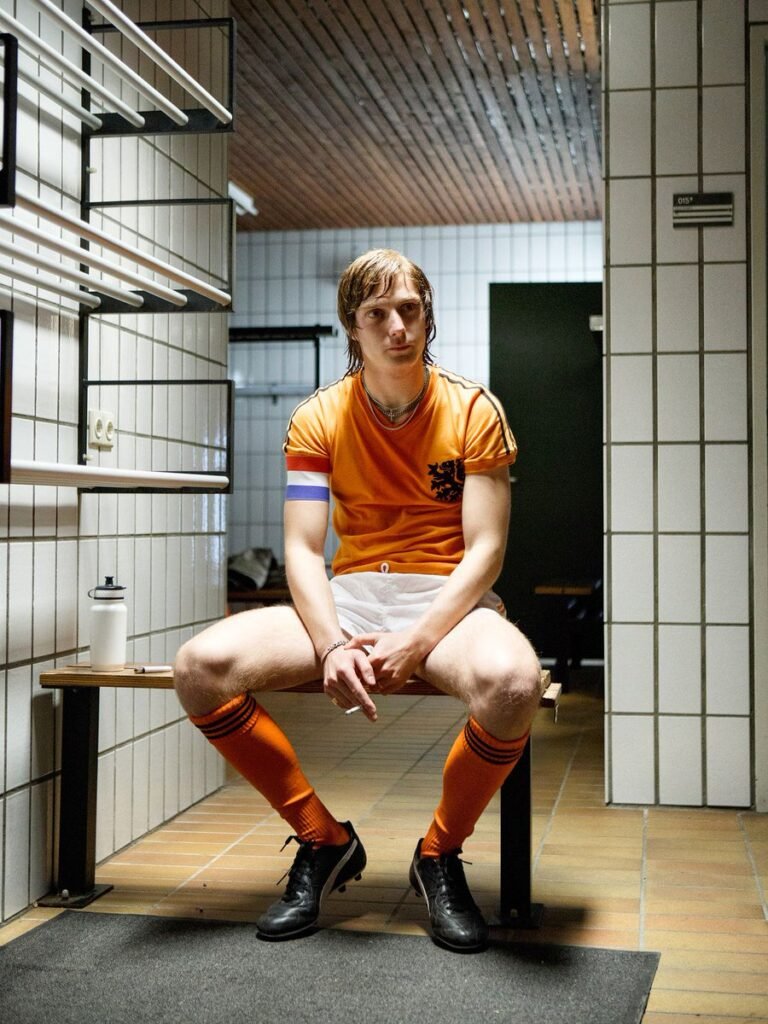
In 1991, you underwent major heart surgery. Bypasses. You survived. You changed your life. Later, you took part in anti-smoking campaigns — with irony, but sincerely. You said: every flaw has its price.
Family was always your point of reference. Your wife Danny, your children, later your grandchildren. In your autobiography, you emphasised that without a stable private life, you would not have been able to function in the world of football.
Return as Coach and the War with Núñez
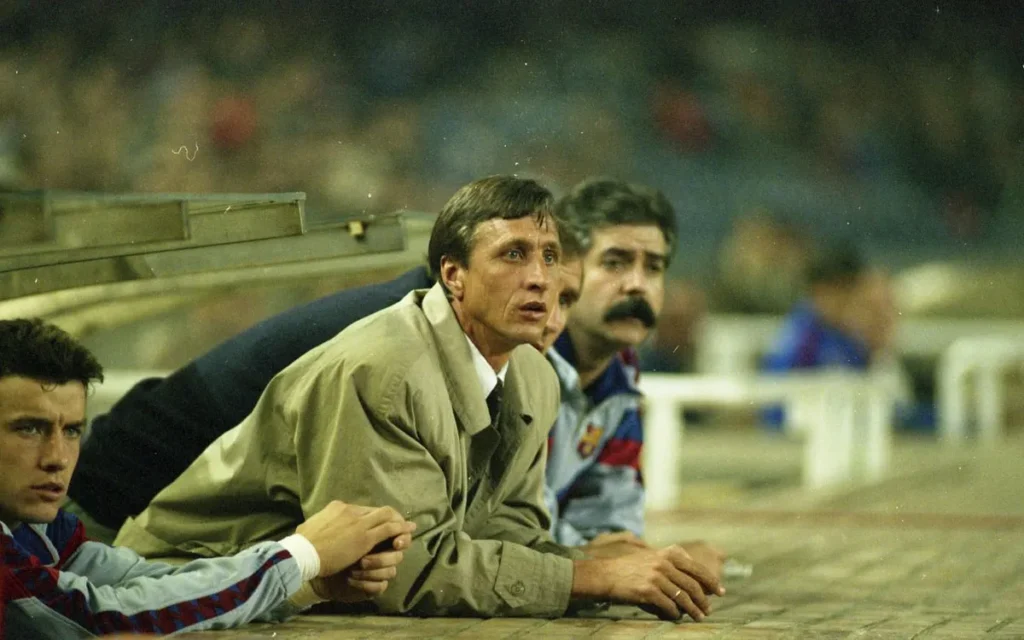
When you returned to Barcelona as coach in 1988, you did not come to put out fires. You came to build a system. The Dream Team was no accident. It was the consequence of philosophy.
The first European Cup in 1992 was the culmination. But at the same time, conflict with president Josep Lluís Núñez intensified. You wanted a long-term idea. He wanted control, pragmatism, power.
Your relationship became an open war. You accepted no compromises that violated philosophy. Núñez did not relinquish control. In the end, you left. But the system remained.
Final Word
In My Turn, you ended your story the way you began it — by looking forward. You were not interested in the past as a list of trophies. You were interested in process. Learning. Development.
You wrote that your whole life you had tried to do things better. That football was only a tool for thinking about the world.
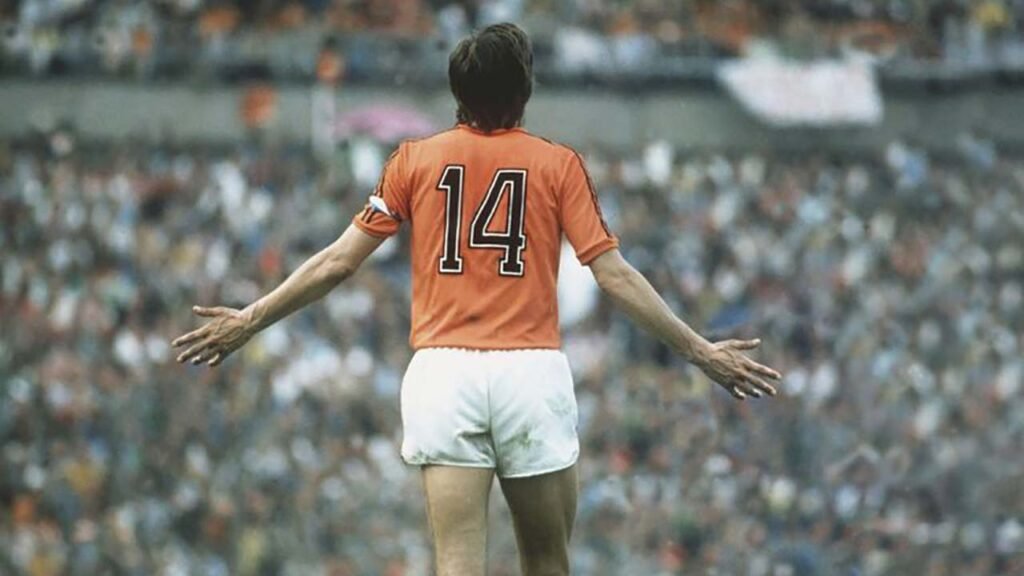
You died on March 24, 2016, in Barcelona — a city that loved you as if you were Catalan. You have been gone for ten years now, but you will forever remain in the memory of the supporters.
You were not a legend.
You were an idea in motion.
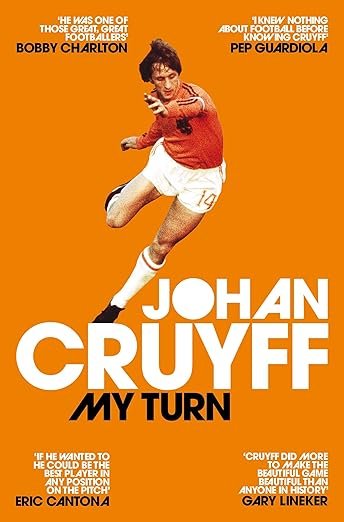
My Turn: The Autobiography Johan Cruyff
My Turn tells the story of Cruyff’s life starting at Ajax, where he won eight national titles and three European Cups before moving to Barcelona where he won La Liga in his first season, in 1973, and was named European Footballer of the Year. He won the Ballon d’Or three times, and led the Dutch national team to the final of the 1974 World Cup, famously losing to West Germany, and receiving the Golden Ball as the player of the tournament.