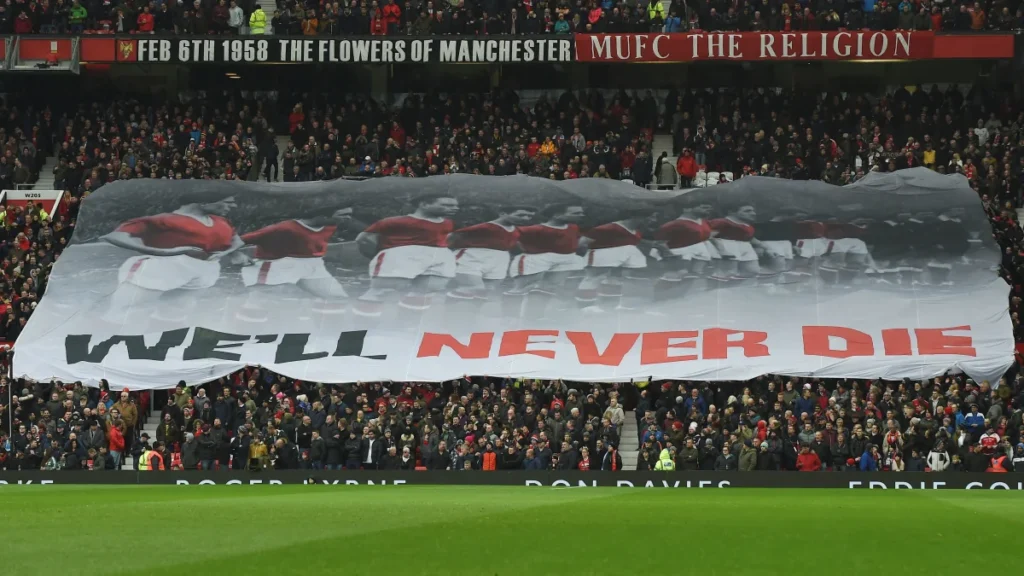
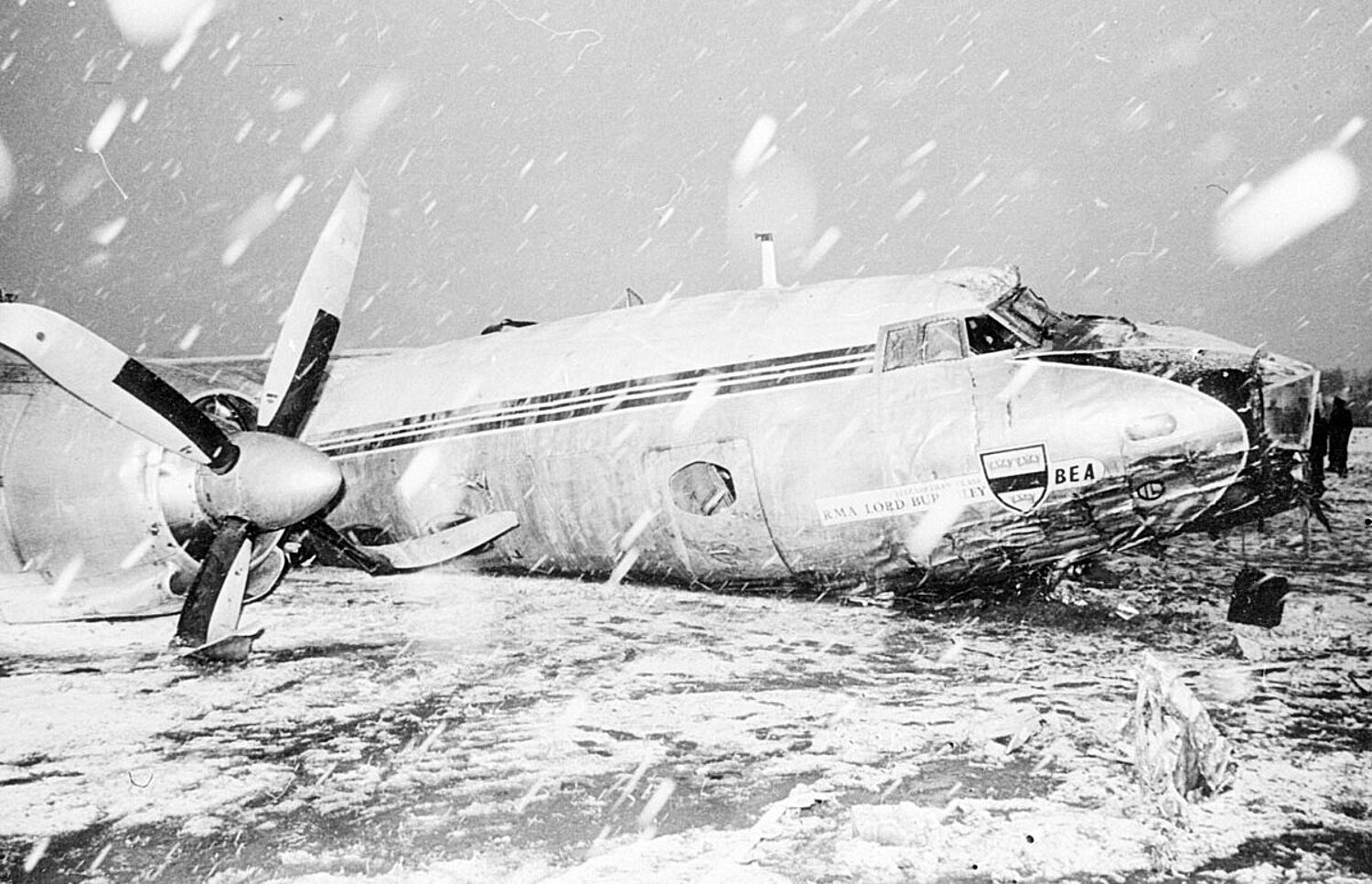

Thursday, February 6, 1958, became the darkest day in Manchester United’s history. A plane carrying players, club staff, journalists, and fans crashed at Munich Airport.
After two failed attempts to take off, the aircraft hurtled into a building filled with fuel barrels, igniting into a blazing inferno. The task of rebuilding the club from the ashes was monumental.
The conditions that day were far from ideal for flying. Snow fell relentlessly, fierce winds blew across the airport, and the runway had turned into a treacherous slush. Nevertheless, the plane attempted its run. Captain James Thain noted the speed climbing to 210 km/h—a critical threshold. All seemed on course until, suddenly, the speed dipped to 190 km/h.
“What the hell is wrong now?” he cursed. It was their third attempt to take off after earlier engine troubles. Thain glanced around in desperation as his co-pilot, Captain Ken Rayment, screamed, “Jesus, we won’t make it!”
Some passengers sensed the foreboding. Duncan Edwards, the young prodigy of English football, managed to send a telegram home before boarding: “All flights canceled. Returning tomorrow.” He never made it back. Moments later, the aircraft tore through a fence and smashed into a fuel-laden building. It split in two and erupted into flames. Of the 43 passengers on board, 23 perished, including eight players, club staff, and journalists.
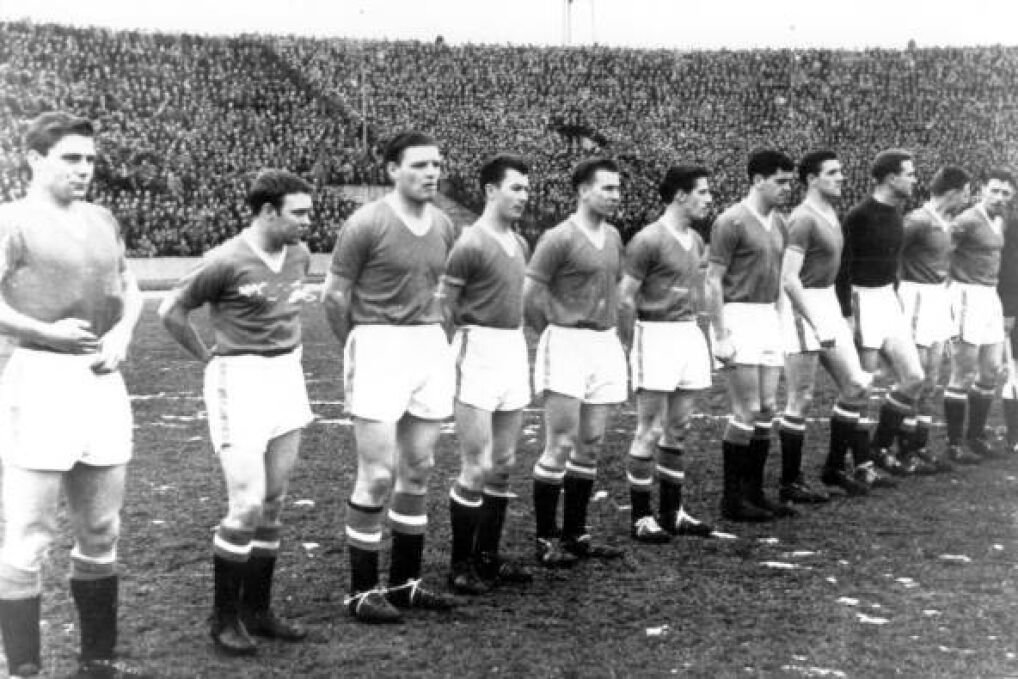
The team had been returning from Belgrade in high spirits. They had drawn 3-3 with Crvena Zvezda, which, after a home victory, secured them a spot in the European Cup semi-finals. Laughter filled the plane as players read books, played cards, and exchanged jokes. Defender Bill Foulkes recalled chatting about the bitter cold outside. Journalist Frank Taylor, one of 11 reporters aboard, later reminisced about dreaming of being home with his wife and sons.
But the joviality evaporated in Munich. A scheduled refueling stop turned into a nightmare. After the first failed takeoff attempt, few worried. After the second, silence gripped the passengers in the waiting lounge. On the third boarding call, they climbed aboard with palpable dread. Foulkes tucked away his cards. Jokes were abandoned. Some passengers shifted nervously to the back of the aircraft, hoping it might offer safety. “I don’t like it here. It feels safer at the back,” said David Pegg.
The Engine’s Haunting Roar
At 4 p.m., the third attempt began on runway 25. “We waited for the engines to roar,” Frank Taylor later wrote. “Finally, the deafening noise came. The plane accelerated—130 km/h… 150… 200… Then, suddenly, a sharp jolt.” The right engine made an unsettling noise. The plane veered right, onto the grass. A sickening impact followed, like a punch behind the ear. Inside the cabin, walls crumpled like cardboard, luggage flew, and darkness descended.
Taylor struggled to stay conscious, likening it to drowning, desperately trying to keep his head above water. Outside, the chaos unfolded. The plane had crashed through a fence, crossed a road, struck a tree, and smashed into a disused building filled with barrels of gasoline. The result was inevitable. The wreckage, with 43 passengers inside, erupted into flames.
Goalkeeper Harry Gregg described the scene vividly: “I heard a crash, then silence, followed by twisted metal everywhere. It was blindingly bright, then pitch dark. Blood filled my mouth; the taste was salty. Time froze.”
Gregg, remarkably unscathed, became a hero. He rescued a baby near him, then returned for the mother, Vera Lukić, who was pregnant and severely injured. Searching for teammates, he found Bobby Charlton and Dennis Viollet and dragged them to safety. Manager Matt Busby, severely injured, was found next. “My legs, my legs!” he cried. The survivors were loaded onto a German civilian’s truck, arriving at the hospital long before the emergency services.
The Aftermath
The world learned of the tragedy the next day. Headlines screamed: “Seven Players Dead. Matt Busby Critical. Eight Journalists Among 21 Killed.” Captain Roger Byrne, Mark Jones, Tommy Taylor, and the wonderkid Duncan Edwards were among the dead. Edwards clung to life for 15 days before succumbing to his injuries.
Bill Foulkes and Harry Gregg visited their injured teammates in a Munich hospital. When they asked about the others, a nurse replied with chilling finality: “That’s all. The rest didn’t make it.”
Rebuilding From the Ashes
The country mourned, but football continued. Thirteen days later, United fielded a makeshift team against Sheffield Wednesday in the FA Cup. With youth players and a sense of duty to their fallen comrades, they triumphed 3-0. Jimmy Murphy, Busby’s assistant, led the charge to rebuild. “I had no players, but I had a mission,” he later said.
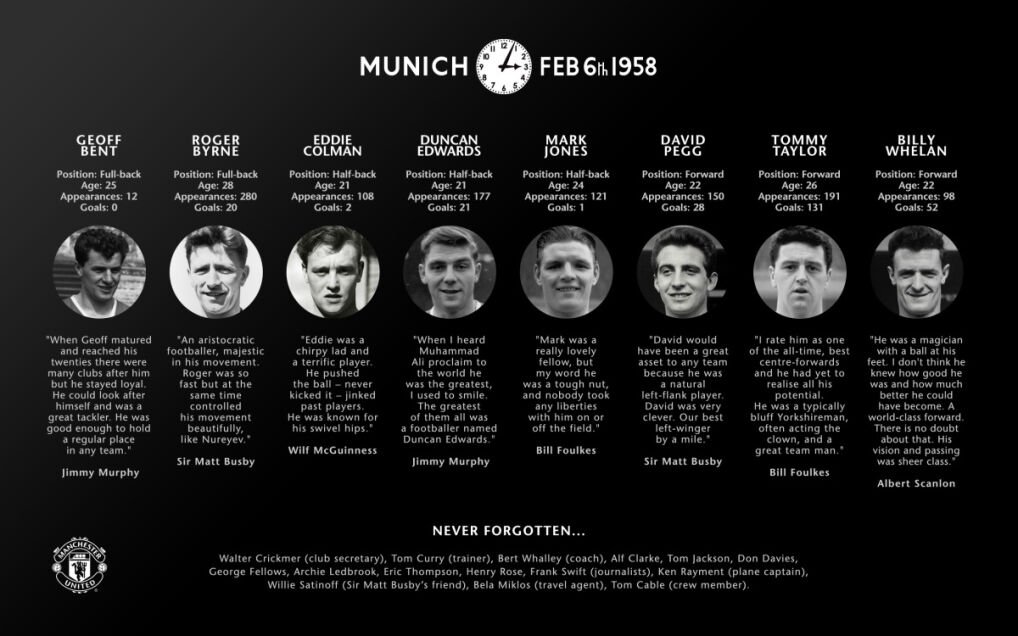
Murphy himself had narrowly avoided the crash. He had stayed behind to manage Wales in a crucial World Cup qualifier. Together with Busby, he rebuilt the club. Four years later, United claimed the FA Cup. On the tenth anniversary of Munich, they lifted the European Cup, with Charlton and Foulkes leading the charge.
“It was our debt to those who died,” Charlton reflected years later. “They started what we finished.”
For Gregg and Charlton, the memories of that fateful day never faded. The tragedy scarred Manchester United but also forged its resilience, a spirit that burns brightly to this day.